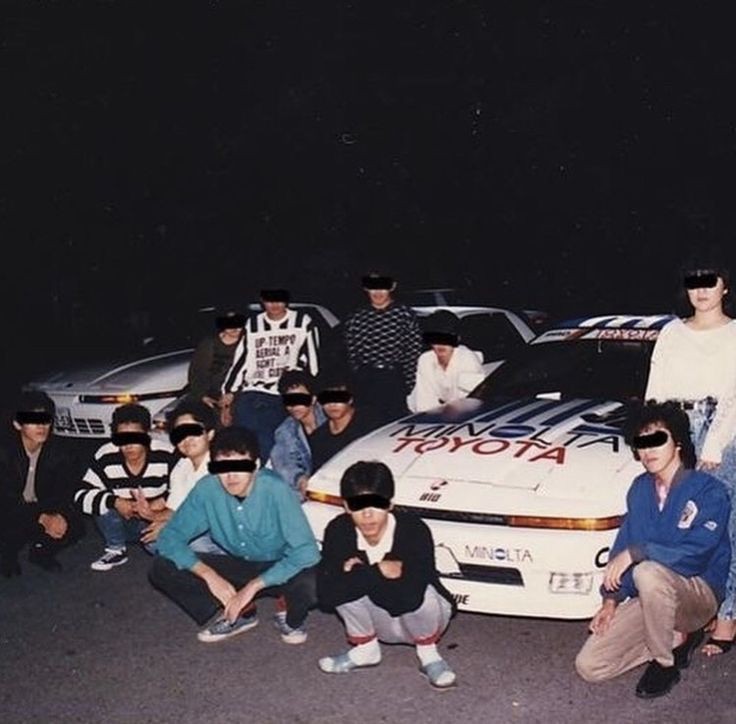
Tokyo presents a paradox: the world's most digitally saturated city simultaneously hosts the planet's most sophisticated analog underground. While surface Tokyo floods with QR codes, cashless payments, and hyper-connected infrastructure, a parallel city operates offline—deliberately untracked, intentionally unsearchable.
This isn't technological regression. It's cultural adaptation. As digital surveillance expands, valuable cultural capital migrates to channels that resist capture. The most interesting things happening in Tokyo today leave no data trail.
What looks like nostalgia is actually strategic resistance.
THE PARADOX OF HYPER-CONNECTION
Tokyo's digital infrastructure is both comprehensive and compulsory. From Suica cards tracking movement to LINE dominating communication, digital integration feels inevitable. But this very comprehensiveness creates pressure points—and opportunities for those who understand how to operate outside the grid.
THE ESCALATING COST OF DIGITAL VISIBILITY
As algorithms optimize for engagement, subcultures face a choice: become content for platforms or disappear. Tokyo's underground chooses a third path: operate in physical space while remaining digitally invisible.
"The most valuable cultural knowledge in Tokyo today travels at walking speed, between people who know each other by face, not handle."
This creates an information economy where access requires physical presence, where reputation circulates through whispers, not likes, where influence cannot be bought with ad spend.
CASE STUDIES: THE ANALOG NETWORK ARCHITECTURE
SYSTEM ANALYSIS: COUNTER-ALGORITHMIC DESIGN
These networks aren't accidents—they're deliberately designed systems that exploit specific properties of physical space to resist digital capture.
DESIGN PRINCIPLES OF THE ANALOG UNDERGROUND
These principles create systems that are:
Search-resistant: No digital footprint means no algorithmic discovery. You cannot Google your way in.
Scale-resistant: Physical constraints limit growth. A venue with 20 seats cannot scale to 20,000 followers.
Surveillance-resistant: Cash transactions, verbal communication, physical artifacts leave minimal data trail.
Platform-resistant: No dependency on social media, payment processors, or cloud services.
"The most secure system is one that doesn't exist in digital form. Tokyo's underground treats physical space as encrypted storage."
THE HUMAN PROTOCOL: UNSPOKEN RULES OF ACCESS
Access to these networks follows specific protocols that resemble cryptographic handshakes:
PHASE 1: INITIAL CONTACT
Introduction through trusted intermediary. No digital communication—initial meeting arranged in person, often at neutral location. Verification through shared cultural references, not digital credentials.
PHASE 2: OBSERVATION PERIOD
Weeks or months of low-stakes interaction. Testing consistency, discretion, contribution. Evaluation happens through subtle cues: punctuality, attention to detail, respect for space.
PHASE 3: GRADUAL ACCESS
Information shared incrementally. First a venue recommendation, then an event date, finally contact information. Each step tests discretion—information that leaks ends the relationship.
PHASE 4: FULL INTEGRATION
Becoming information source, not just consumer. Expected to contribute, recommend, vouch. The network grows through trusted expansion, not viral spread.
This protocol ensures network integrity while resisting digital replication. It cannot be automated, cannot be scaled, cannot be monetized through platform economics.
THE COST OF INVISIBILITY
Operating outside digital systems carries real costs:
Discovery friction: New participants face high barriers to entry. The scene remains small by design.
Geographic limitation: You must be in Tokyo, in specific neighborhoods, at specific times.
Economic constraints: No digital payment means cash economy, limited to physical transaction scale.
Documentation absence: History exists in memory, not archives. Cultural memory fades as participants age or leave.
Yet participants accept these costs as features, not bugs. The constraints create the culture.
TOKYO AS PROTOTYPE
Tokyo's analog underground represents a potential future—not a nostalgic past. As digital surveillance expands globally, other cities will develop similar adaptations.
The key insight: resistance doesn't require rejection of technology, just strategic avoidance of capture. Tokyo's underground uses digital tools when convenient (coordination via encrypted messaging) but keeps core cultural transmission analog.
This hybrid approach—digital for logistics, analog for culture—may become the model for subcultures worldwide seeking to maintain autonomy in increasingly monitored environments.
"Tokyo isn't going analog. It's teaching the world how to be digitally invisible when it matters."
FIELD METHODOLOGY: MAPPING THE UNMAPPABLE
Researching these networks requires abandoning digital methodologies:
1. Physical presence: Months of neighborhood immersion, not web scraping.
2. Relationship building: Trust established through consistency, not online credentials.
3. Analog documentation: Notes in physical notebooks, not cloud storage.
4. Pattern recognition: Observing repetitions in physical space, not digital analytics.
5. Discretion: Information shared only after verification, not for engagement.
This methodology itself becomes part of the system being studied—you cannot observe without participating, cannot participate without being changed by the protocols.
SYSTEM NOTES
• The most valuable cultural networks in Tokyo leave the lightest digital footprints
• Physical constraints become cultural features in resistance systems
• Trust networks cannot be accelerated by digital tools—they require temporal investment
• Analog systems excel at preserving what digital systems optimize away: scarcity, locality, ephemerality
• The future of subculture may be hybrid: digitally coordinated, analogically expressed
• Resistance to capture often looks like nostalgia to those who don't understand the stakes
• Tokyo's underground treats the city itself as a living, encrypted network
Sometimes the most advanced technology is knowing when not to use technology.